China-U.S. Trade Tensions Resurface: Uncertainty Looms Over Secondary Copper Raw Material Imports [SMM Analysis]

Published: Feb 7, 2025 10:22
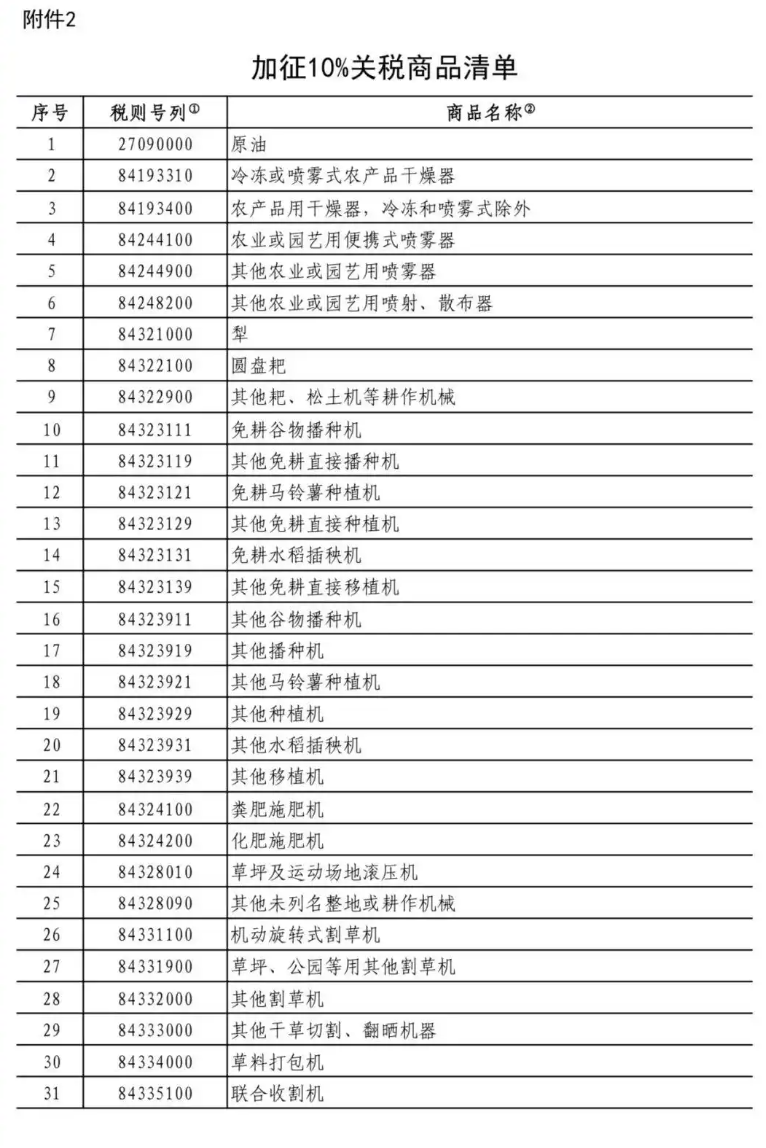
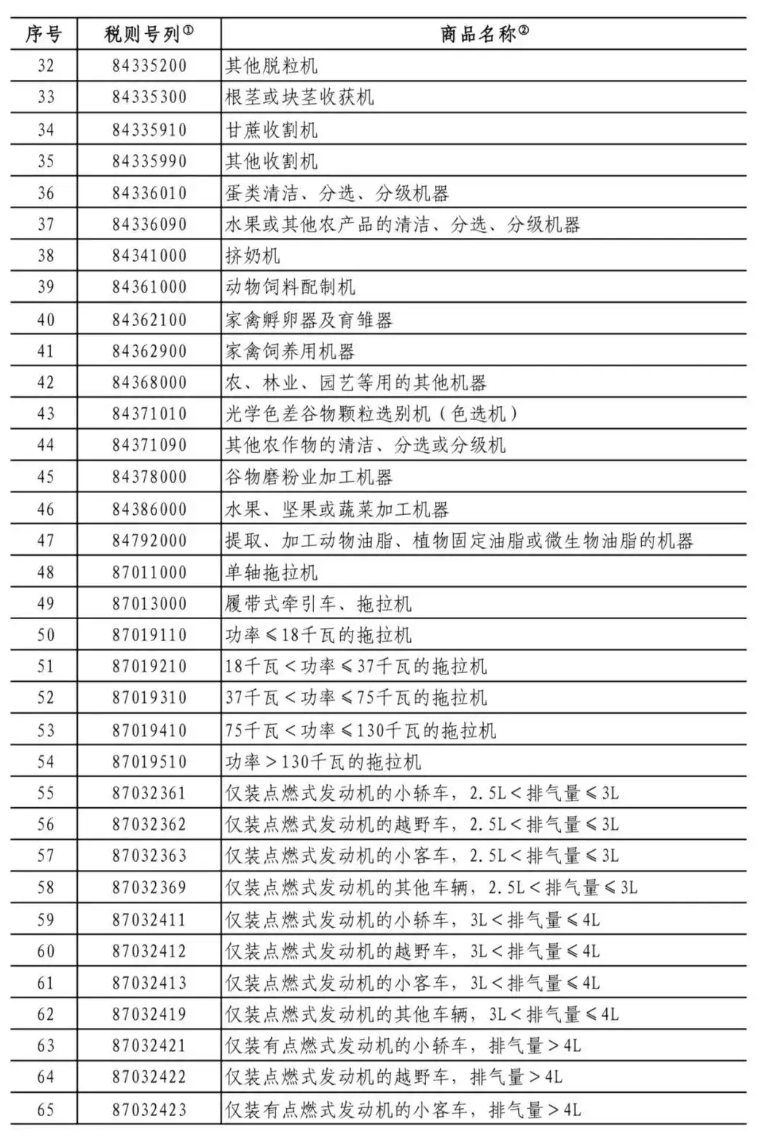
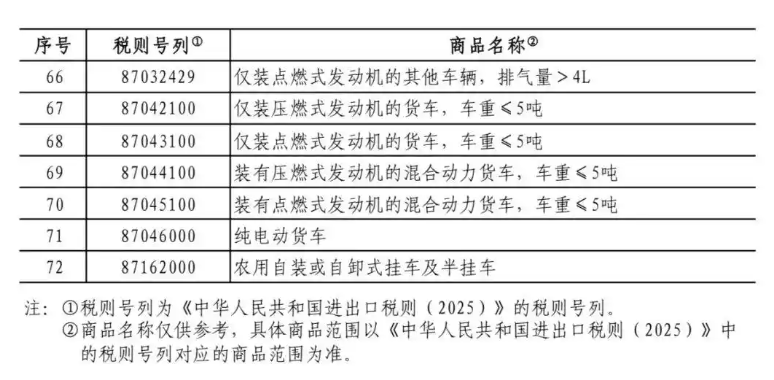
【US-China Trade Disputes Resurface, Secondary Copper Raw Material Imports Face Uncertainty】 In mid-to-late November 2024, news emerged that the newly elected US President, Donald Trump, planned to impose a 10% tariff on Chinese products entering the US. This sparked concerns among most domestic importers, who feared that the trade disputes between China and the US might once again affect the import of secondary copper raw materials. As a result, they began gradually halting direct imports of secondary copper raw materials from the US. Now, the tariff policy has been initially implemented. On February 1, 2025, US President Donald Trump signed an executive order to raise tariffs by 10% on goods imported from China, based on the existing tariff rates. In response, China's Customs Tariff Commission of the State Council promptly issued an announcement regarding tariff hikes on certain imported goods originating from the US. However, secondary copper raw materials (HS code: 74040000) were not included in the list of goods subject to this round of tariff hikes.

》View SMM Copper Quotes, Data, and Market Analysis

》Click to View Historical Price Trends of SMM Spot Copper              

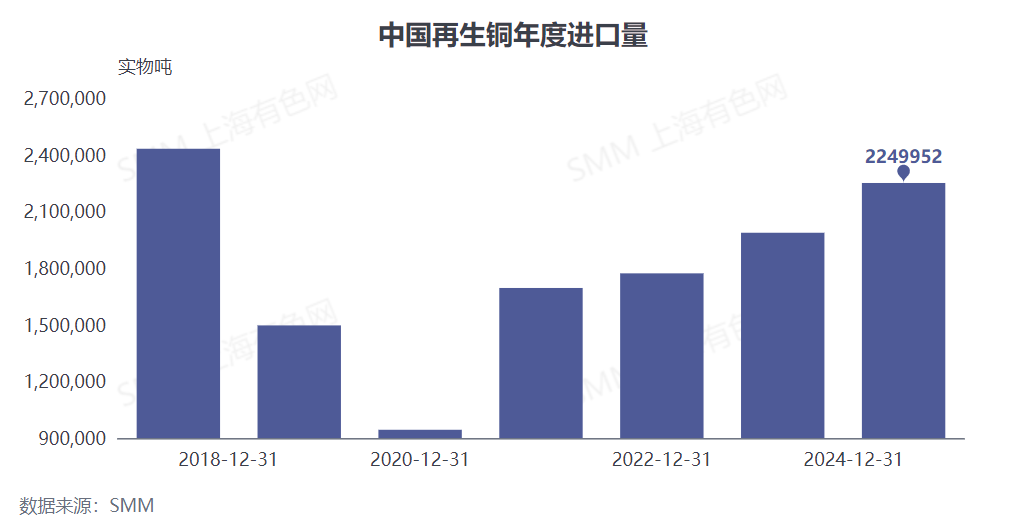
       Tracing back to 2018, during the US-China trade dispute, imports of secondary copper raw material from the US were affected and subjected to a 25% tariff hike. However, the reduction in import volume of secondary copper raw material at that time was not directly caused by the tariff adjustment but rather due to the strict restrictions on the import of "Category 7" copper scrap. These restrictions once led to a tight supply of secondary copper raw material in the domestic market.

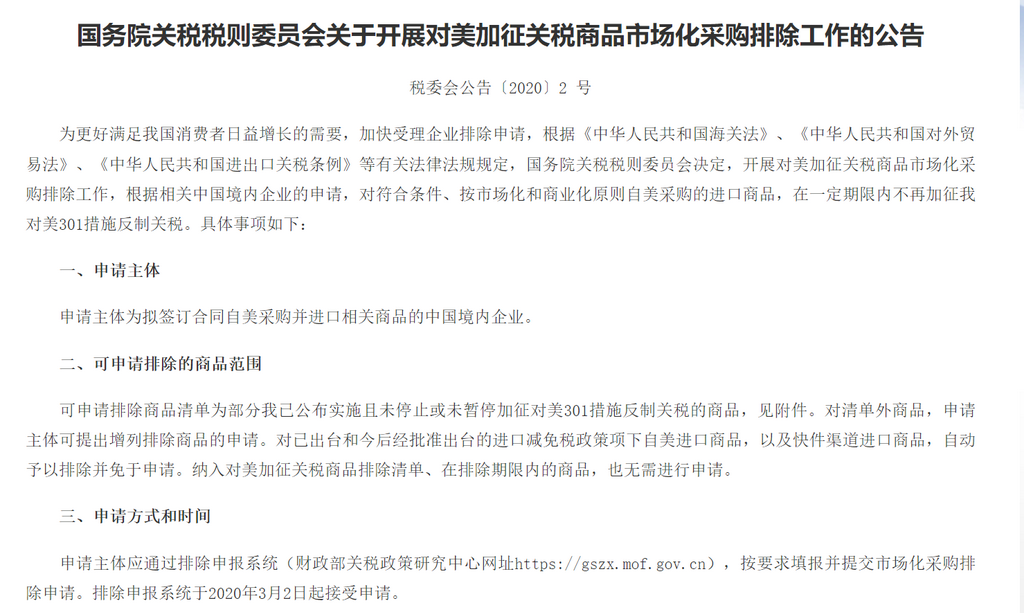
       However, with the lifting of relevant permit restrictions in 2020, secondary copper raw material was allowed to be freely traded as a commodity, resulting in four consecutive years of positive growth in import volume. Additionally, on February 18, 2020, the Customs Tariff Commission of the State Council issued an announcement on the market-based exclusion of US goods subject to additional tariffs. It explicitly stated that imported goods purchased from the US under market-oriented and commercial principles would not be subject to additional retaliatory tariffs for a certain period. Secondary copper raw material (HS code: 74040000) was included in this application scope, meaning that importers could exempt the previously imposed 25% retaliatory tariff by submitting the relevant application.
       However, in mid-to-late November 2024, news emerged that the newly elected US President Trump planned to impose a 10% tariff on Chinese products entering the US. This sparked concerns among most domestic import traders, who feared that the US-China trade dispute might once again affect the import of secondary copper raw material. As a result, they began gradually halting direct imports of secondary copper raw material from the US.

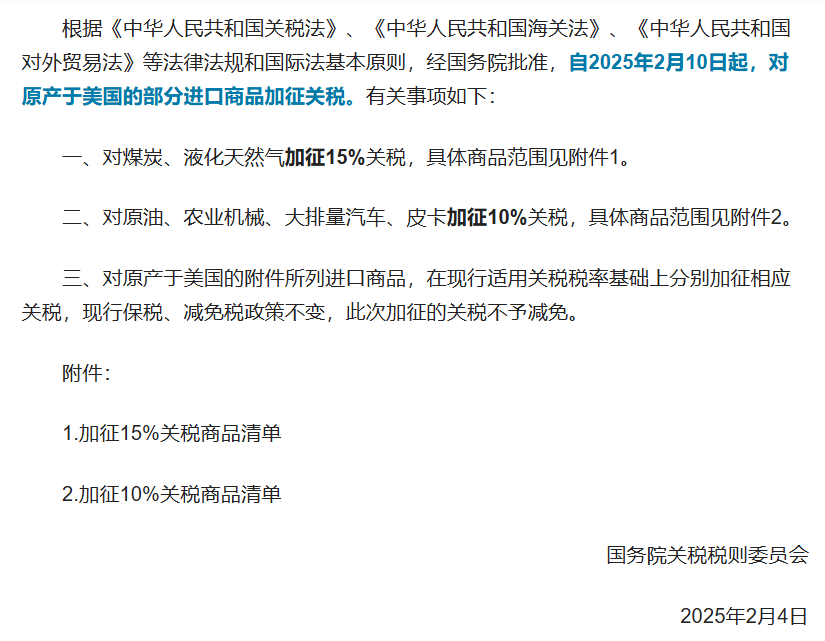
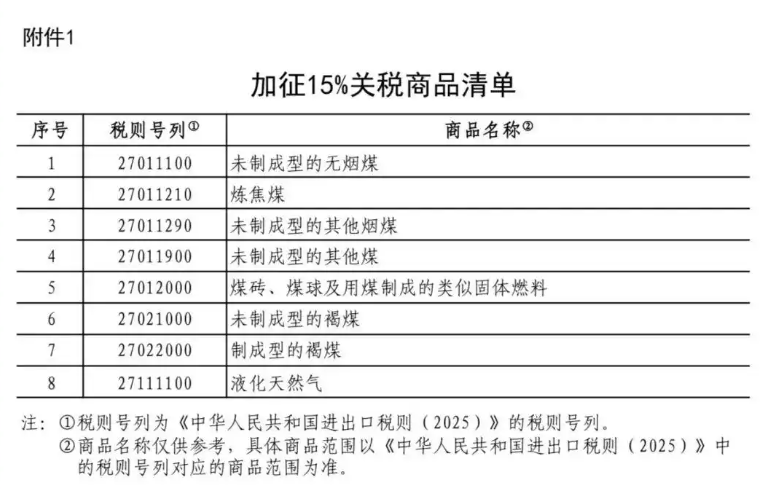
       Now, the tariff policy has been initially implemented. On February 1, 2025, US President Trump signed an executive order to impose an additional 10% tariff on Chinese goods on top of the existing tariffs. In response, the Customs Tariff Commission of China's State Council promptly issued an announcement on imposing tariffs on certain imported goods originating from the US. However, secondary copper raw material (HS code: 74040000) was not included in this round of tariff hikes. Details are as follows:
       Nevertheless, according to SMM, most traders stated that although they have resumed normal imports of secondary copper raw material from the US, they remain concerned about the uncertainty of tariff policies. Currently, there are no results from the talks between Trump and China. To mitigate potential risks, they have been quoting prices slightly lower than before to prepare for both scenarios. Meanwhile, a small number of traders indicated that they would continue to observe for a few days and make decisions after the policies are fully implemented.

       In summary, this initial confrontation over tariffs between the US and China has once again triggered market concerns about tariffs and the future of US-China trade disputes. With the continued escalation of US-China trade frictions, an increasing number of export enterprises are choosing to establish factories overseas to mitigate risks. This trend may lead to an overall decline in traditional manufacturing industries and force some foreign trade enterprises to face the risk of being eliminated or voluntarily exiting the market.


     

Data Source Statement: Except for publicly available information, all other data are processed by SMM based on publicly available information, market communication, and relying on SMM‘s internal database model. They are for reference only and do not constitute decision-making recommendations.

For any inquiries or to learn more information, please contact: lemonzhao@smm.cn
For more information on how to access our research reports, please contact:service.en@smm.cn
Related News
"Premier Li Qiang Leads State Council Meeting on Enhancing Effective Investment, Boosting Economic Growth"
Feb 6, 2026 23:56
"Premier Li Qiang Leads State Council Meeting on Enhancing Effective Investment, Boosting Economic Growth"
Read More
"Premier Li Qiang Leads State Council Meeting on Enhancing Effective Investment, Boosting Economic Growth"
Premier Li Qiang presided over an executive meeting of the State Council to study policy measures for promoting effective investment. The meeting noted that promoting effective investment plays an important role in stabilizing economic growth and strengthening momentum for development. It is necessary to innovate and improve policy measures, and intensify efforts to enhance the efficiency of utilizing funds such as central budget investments, ultra-long-term special treasury bonds, local government special bonds, and new-type policy-based financial instruments. In conjunction with formulating and implementing the 15th Five-Year Plan
Feb 6, 2026 23:56
"Guided by Xi Jinping Thought, Implement 20th CPC Congress Spirit, Apply New Development Philosophy...
Feb 6, 2026 23:54
"Guided by Xi Jinping Thought, Implement 20th CPC Congress Spirit, Apply New Development Philosophy...
Read More
"Guided by Xi Jinping Thought, Implement 20th CPC Congress Spirit, Apply New Development Philosophy...
Guided by Xi Jinping Thought on Socialism with Chinese Characteristics for a New Era, we will thoroughly implement the spirit of the 20th National Congress of the Communist Party of China and the plenary sessions of the Party’s 20th Central Committee, fully and faithfully apply the new development philosophy, strengthen top-level design, build computing power interconnection nodes oriented toward national hub periods, major strategic regions, and key industries, establish a system of computing power interconnection nodes, improve the efficiency and service level of public computing power resources, and promote high-quality development of computing power.
Feb 6, 2026 23:54
Indirect Iran-US Nuclear Talks in Muscat Show Progress, Omani FM Mediates Tense but Efficient Discussions
Feb 6, 2026 23:47
Indirect Iran-US Nuclear Talks in Muscat Show Progress, Omani FM Mediates Tense but Efficient Discussions
Read More
Indirect Iran-US Nuclear Talks in Muscat Show Progress, Omani FM Mediates Tense but Efficient Discussions
After intensive indirect consultations, the new round of nuclear talks between Iran and the US in Muscat, the capital of Oman, has achieved phased progress. It is reported that during this round of talks, the Iranian and US delegations did not meet directly. Instead, Omani Foreign Minister Badr acted as an intermediary, conveying a series of core proposals, strategic concerns, and policy positions to the other side. The atmosphere at the talks was tense yet efficient. According to preliminary on-site assessments, although both sides continue to negotiate over specific terms, they have reached a consensus on the key objective of "continuing dialogue."
Feb 6, 2026 23:47